

A Guide to B Vitamins - Their Benefits and Forms

B vitamins are a diverse family of nutrients that are found in both animal and plant foods. That said, there are so many that it's easy to get them confused if you aren't already familiar with them. Also, for each type of B Vitamin there is, there are also a variety of different forms. This can drastically affect how well they are absorbed and how effectively our bodies are able to take advantage of their benefits.
Vitamin B1 or Thiamin
Naturally found in a multitude of healthy whole foods Vitamin B1, otherwise known as thiamin, is an essential water soluble vitamin commonly found in whole grains, pork, and nuts. It may help support:
Energy Production and Promotes a Healthy Appetite: It achieves this by acting as a coenzyme converting the main food macros (protein, fat, and carbohydrates) into usable cellular energy (via ATP).
Brain and Nerve Health: B1 helps protect the myelin sheath of your nerves and can assist in preventing neurological issues like Wernicke-Korsakoff syndrome, especially in those who have a history of heavy alcohol consumption.
Heart Health: According to a study conducted by the American College of Cardiology, nearly 1 in 3 people with congestive heart failure have a thiamine deficiency. This is due to a variety of factors and is not exclusively linked to B1 deficiency, however certain deadly variations such as Wet Beriberi can be avoided by preventing deficiency.

Unfortunately thiaminase, a natural enzyme which can be found in raw/processed meat as well as some veggies, coffee, and tea can contribute to the breakdown of naturally occurring B1 before it can be absorbed. Luckily dangerous levels of B1 deficiency is rare. However, poor diet, heavy drinking, and certain weight loss drugs/surgeries can also contribute to suboptimal levels of B1 in the body.
Vitamin B2 or Riboflavin
Riboflavin or B2 is an essential vitamin that naturally occurs in many animal foods like fish, meat, eggs, and milk products. It helps our bodies break down proteins, fats, and carbohydrates and is a major player in maintaining our body’s energy.
Riboflavin helps achieve this by converting carbs into adenosine triphosphate (ATP) which is vital for storing energy in our muscles.

Although outright deficiency is rare, especially among those who consume animal products, the body can only store small amounts of it at a time and it depletes quite rapidly if not consumed or taken regularly. This is most often found in vegetarians, vegans, those with unfortified and restricted diets, those who have a history of alcohol abuse, or those who are on certain medications that may inhibit absorption.
A recent Japanese study coordinated in partnership with Japan's public health agencies also showed a correlation between higher B2 intake and a lowered risk of dementia. According to this study they tracked 4,000+ Japanese adults over 15 years and found their dementia risk was cut by nearly 50%!
Vitamin B3, Niacin, or Niacinamide
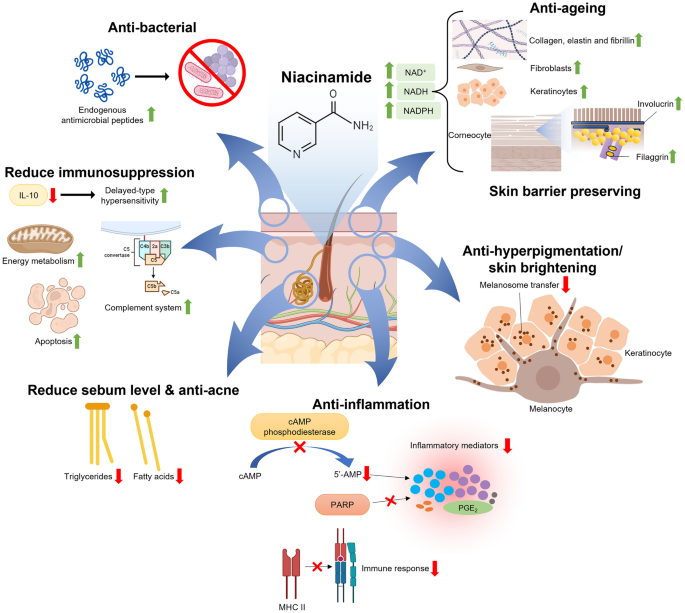
Want your skin to stay health and beautiful? The main focus of many people who take B3 is just that. Niacinamide in particular is best known for its essential function of building your skins proteins which may help with:
Skin Moisture: Some researchers suggest B3 could help support the skin’s moisture levels by maintaining its natural ceramide barrier while at the same time potentially reducing excess oil production.
Managing Pigmentation and Reducing Wrinkles:
When taken in the form of niacinamide, B3 can be utilized to restore our natural NAD+ stores which can potentially help improve skin cell function, reduce UV damage related pigmentation, and hold off visible skin aging by increasing our bodies collagen production.
Reducing Skin Inflammation:
B3 can help block certain inflammatory chemical signals like interleukins and TNF that are produced by immune cell when they're distressed, which can cause redness and swelling in the skin. By calming those immune cells it can also reduce certain histamine responses that cause annoying itching, burning, and general irritation.
Although both forms of B3 can carry benefits the Niacin form can cause not only an annoying tingling "flush" reaction, but also some types of damage to the body in high doses. This is why we opted for the Niacinamide form. It's heavily researched, has a larger safety profile, and more wide ranging benefits in my reading and research.
Vitamin B5 or Pantothenic Acid
Like all B vitamins B5 also helps in macro nutrient absorption and is found in a variety of healthy foods ranging from mushrooms, broccoli and potatoes, to meat, eggs, and dairy products.
Its benefits may include:
Supporting Skin, Hair, and Eye Health:
By acting as a humectant it helps lock in moisture, supports the skins barrier, and aids in repairing damaged cells.
Supporting Proper Function of the Nervous System and Organs:
B5 helps our bodies build acetylcholine, a primary neurotransmitter that allows our nervous system to talk with our muscles and organs, keeping things operating smoothly.
Supporting the Production of Our Red Blood Cells, which carry oxygen and nutrients throughout our bodies.
Supporting Hormone Production and Balance in the Adrenal Glands:
B5 is key to the production of hormones in the adrenal glands, like cortisol and adrenaline while also being a cornerstone to the production of sex hormones such as testosterone, estrogen, and progesterone.
Although human clinical studies are still sparce, the form of B5 used in our products Calcium d-Pantothenate, is shown to be utilized well in both culture and animal studies and has a very high safety profile in the studies that have been conducted on people. With future studies we hope to see even more benefits of this essential vitamin uncovered.
As an added benefit we also include PABA (Para-aminobenzoic Acid) or B10 which is a Folate precursor that also aids in our bodies assimilation of pantothenic acid potentially amplifying the above benefits.
Vitamin B6 or pyridoxal 5'-phosphate
Vitamin B6 is an essential nutrient and neurotransmitter precursor that has a role in over 60 enzymatic processes within the body! Although it would be impossible to list them all some of its main purported benefits are:
Mood Regulation and Reduction of Depression Symptoms:
By aiding in the creation of serotonin, dopamine and GABA (gamma-aminobutyric acid) while also playing a potential role in decreasing homocysteine (which is linked to depression and other psychiatric disorders) many studies have linked low levels of B6 to significantly increased likelihoods of depression.
Brain Health:
Elevated homocysteine blood levels have been noted as a potential risk factor in Alzheimer’s dementia and other memory impairments. Due to it's role in lowering homocysteine this makes B6 a candidate for preventative use. That said, once Alzheimer’s or memory impairment has occurred current studies show that it's too late for B6 to have an effect. Although inconclusive there does seem to be potential as a preventative, pending the results of ongoing research.
Electrolyte Balance and Exercise Support:
Due to its hormone related benefits it helps to break down glycogen into glucose, positively affecting muscle activity before and after exercise, while also assisting electrolytes in maintaining fluid homeostasis inside and outside cells and regulating water retention.
Now, and this is important to note whether you pick up our product or a trustworthy competitor, there are two common forms of B6 that are commonly available Pyridoxine and Pyridoxal-5-Phosphate (P5P). Although both can help in remediating deficiency and have notable benefits the synthetic Pyridoxine form of B6 requires conversion into P5P via the liver in order to be used effectively by the body. This creates a bottleneck as far as absorption goes depending on your individual genetics and high doses of Pyridoxine has been shown to run the risk of causing what's known as Sensory Neuropathy (nerve damage, tingling, numbness, etc). P5P, being the form your body needs anyhow, helps to bypass this risk by being significantly more bioavailable and bypassing the liver going straight to where it is needed.
For this reason we opt to use P5P in our B-Complex formula vs the more inexpensive Pyridoxine.
Vitamin B12 or Methylcobalamin
Vitamin B12 is one of the most common B vitamins and for good reason! It's found naturally in many animal based foods such as beef, fish, eggs, and dairy, and is critical in many bodily functions such as:
Nerve & Brain Health:
It helps to support the repair of damaged peripheral nerves and maintain our myelin sheaths (the fatty sheaths that cover and protect our nerve endings) that allow electrical signals to travel efficiently, and like B6 it helps to lower homocysteine, which can cause nerve damage and increase the risk of depression and memory impairment if levels get too high.
Mood Support:
Like B6 it plays a role in producing neurotransmitters such as serotonin and dopamine while also regulating homocysteine, which helps regulate mood and potentially helps prevent depression risk.
Red Blood Cell Production:
Without enough B12 our red blood cells can grow too large and become an odd oval shape. These malformed blood cells tend to have issues traveling through the body and are linked to different types of anemia. B12 helps create the materials required for our bodies to form normal sized cells and promotes healthy blood cell division.
Daily Energy and Sleep Support:
One of the most common purported benefits of B12 is for energy (hence its addition in the vast majority of energy drink brands), and although it can have benefits in this area an often overlooked area is for our sleep. If taken early in the morning B12 can support the natural production of melatonin and help "retime" our bodies internal clock. However, it's to be noted that taken too late in the day this "retiming" can cause issues falling asleep. For this reason any supplements containing B12 should be taken earlier rather than later.
Now, like B6, B12 can come in a few different forms which may effect how well our bodies absorb and utilize it. The two most common are Cyanocobalamin and Methylcobalamin. Cyanocobalamin, although incredibly popular in energy drinks as well as in many popular store brands of vitamins for its stability to light and low cost, it is a synthetic form that isn't found in nature. (The "Cyano" portion of it's name is from the inclusion of cyanide, which albeit very trace, gives me the heebie jeebies in concept). Because our bodies have to break Cyanocobalamin down into a more bioavailable version for use at higher doses, like those found in supplements, we can only utilize around 6-8% (or less) depending on genetic variability. For this reason we've opted to use the same version found in nature Methylcobalamin. This version is the one found in our day to day diet and is much more readily utilized by the body. It is more expensive to produce and breaks down easily in sunlight (which is a primary reason we use fully opaque white bottles) however, we find that this is a more than reasonable tradeoff for the benefits it can provide.
Vitamin B9 or Folate
Folate is another important member of the B vitamin family and, alongside the active Methylcobalamin form of B12, is necessary for various methylation reactions via the donation of methyl groups and converting homocysteine into methionine and the production of SAMe supporting numerous areas of the body alongside its other benefits. Some of these benefits include:
The Production of Enzymes, Hormones, Neurotransmitters, Antibodies,
Vitamins and Cell Membranes:
Folate helps in structurally supporting the integrity and movement of just about every cell in our bodies from neurotransmitter production, helping in the formation of our myelin sheaths and acting as a building block for our DNA, various proteins, and our immune cells.
Energy Production, Immune Function and Detoxification:
Although indirect, folate is essential in maintaining our bodies energy transport system. It works alongside the other B vitamins to help convert our food into energy, and through helping build and maintain healthy blood cells so they can transport those nutrients and energy to the areas our body needs them the most.
Repairing and Building DNA:
Like stated above, folate is essential as a building block for both our DNA and RNA, but it also helps in DNA repair. When DNA sustains damage (from various daily stressors) folate helps supply the molecules needed to fix it. Because of this, folate deficiency is linked to chromosomal breaks and gene instability like Aneuploidy (the loss or gain of entire chromosomes during cell division) which is less than ideal.
Healthy Pregnancy:
One of the most important, and most famous, roles of folate is its role in preventing birth defects. It helps by forming the fetuses neural tube, which through time develops into the young baby's brain and spinal cord. Folate deficiency has been sadly linked to a risk of serious developmental defects like spina bifida (membranes pushing through a hole in the spine) and anencephaly (where a major part of the brain/skull/scalp fails to develop).
Folate is generally found in a large number of foods. However, it's quite unstable and can be damaged by modern food processing, manufacturing and storage. Many common supplements utilize folic acid as well, which although stable, require enzymatic conversion for it to be absorbed properly by the body. Several factors can inhibit this process and lead to low levels of folate in our body. Smoking, heavy drinking, and a poor or restricted diet can also play a major role. For this reason we opt for the more bioavailable L-Methyltetrahydrofolate (or 5-MTHF for short) for its superior usability by the body and for its ability to bypass the easily disturbed enzymatic pathway.
Vitamin B7 or Biotin
Biotin is another great B vitamin and although it is primarily marketed for its help in reversing hair thinning, scaly red rashes, and brittle nails in those who are deficient, it also has other benefits including:
Energy Production:
Like many of the other B vitamins listed above biotin helps in our bodies ability to process our food into energy. It achieves this by bonding to carboxylase enzymes that help our body breakdown specific parts of carbs, fat, and proteins from our food, making them available for use by our bodies.
Healthy Pregnancy:
The body has a higher demand for biotin and breaks it down significantly faster when you're pregnant. Some studies show that up to one half of women experience some level of biotin deficiency when pregnant (even when they have a healthy diet). This combined with biotins role in the development of the babies cells and tissues makes it essential for a healthy pregnancy.
Blood Sugar Support:
Biotin stimulates the production of glucokinase a liver enzyme that helps process glucose and allows our bodies to store it as glycogen. Although studies so far are somewhat limited in scope, they suggest that biotin may help reduce fasting blood glucose levels in those suffering from type 2 diabetes.
All together the B vitamin family works synergistically to support numerous amounts of areas our body needs to feel and function at it's best. With the various stresses, diets, and genetic factors at play in our day to day lives having an assurance that your bases are covered is one less thing to worry about in your health journey. If you found this helpful or educational in any way, or if your interested in trying a B-Complex that covers all the B Vitamins explained above (in their bioavailable forms of course) feel free to check out our "Bio B-Complex" by clicking the product card below and as always I thank you for reading and hope you have a fantastic rest of your day!

"The prevalence of thiamin deficiency in hospitalized patients with congestive heart failure"
"Thiamin (Vitamin B1) – A scoping review for Nordic Nutrition Recommendations 2023"
"Thiamine deficiency disorders: a clinical perspective"
"This Vitamin May Cut Dementia Risk Almost in Half, Research Says"
"Mechanistic Insights into the Multiple Functions of Niacinamide: Therapeutic Implications and Cosmeceutical Applications in Functional Skincare Products"
"Oily Skin: A review of Treatment Options"
"Mechanistic Basis and Clinical Evidence for the Applications of Nicotinamide (Niacinamide) to Control Skin Aging and Pigmentation"
"Studies on wound healing: effects of calcium D-pantothenate on the migration, proliferation and protein synthesis of human dermal fibroblasts in culture"
"The Pharmacokinetics of Orally Administered Calcium Pantothenate in Healthy Adults"
"Pantothenic Acid - Fact Sheet for Health Professionals"
"Linus Pauling Institute - Micronutrient Information Center - Pantothenic Acid"
"Novel Para-Aminobenzoic Acid Analogs and Their Potential Therapeutic Applications"
"B6-responsive disorders: a model of vitamin dependency"
"Relationship of neurotransmitters to the symptoms of major depressive disorder"
"Vitamin B6 level is associated with symptoms of depression"
"Vitamin B6 is associated with depressive symptomatology in Massachusetts elders"
"Longitudinal association of vitamin B-6, folate, and vitamin B-12 with depressive symptoms among older adults over time"
"Homocysteine as a predictor of cognitive decline in Alzheimer's disease"
"The effect of vitamin B6 on cognition"
"Plasma homocysteine as a risk factor for dementia and Alzheimer's disease"
"9 Health Benefits of Vitamin B6 (Pyridoxine)"
"Electrolyte Imbalance in Vitamin B6-Deficient Rats"
"The sodium pump. Its molecular properties and mechanics of ion transport"
"The vitamin B6 paradox: Supplementation with high concentrations of pyridoxine leads to decreased vitamin B6 function"
"Is P-5-P really better than "regular" vitamin B6?"
"B12 as a Treatment for Peripheral Neuropathic Pain: A Systematic Review"
"Vitamin B12 Deficiency and Neuropathy: Symptoms, Science, and Next Steps"
"Vitamin B12 – a Key Nutrient for Nerves"
"Efficacy and Safety of Mecobalamin on Peripheral Neuropathy: A Systematic Review and Meta-Analysis of Randomized Controlled Trials"
"Vitamin B12 Deficiency in Pernicious Anemia: A Hemolytic Anemia Mimic"
"Vitamin B12 Deficiency Anemia"
"Harvard Health - Vitamin B12 deficiency"
"Association of Vitamin B12 Levels with Sleep Quality, Insomnia, and Sleepiness in Adult Primary Healthcare Users in Greece"
"Effects of vitamin B12 on plasma melatonin rhythm in humans: increased light sensitivity phase-advances the circadian clock?"
"Comparative Bioavailability and Utilization of Particular Forms of B12 Supplements With Potential to Mitigate B12-related Genetic Polymorphisms"
"Nutritional Deficiencies and Phospholipid Metabolism"
"Folate-deficiency induced cell-specific changes in the distribution of lymphocytes and granulocytes in rats"
"Toward a better understanding of folate metabolism in health and disease"
"Folate and neural tube defects: The role of supplements and food fortification"
"Structure and function of biotin-dependent carboxylases"
"Marginal Biotin Deficiency is Common in Normal Human Pregnancy and Is Highly Teratogenic in Mice"
"Adequate Intake of Biotin in Pregnancy: Why Bother?"
"Influence of biotin intervention on glycemic control and lipid profile in patients with type 2 diabetes mellitus: A systematic review and meta-analysis"
"A Critical Review of Chromium Picolinate and Biotin"


Comments